| |
-
Spent nearly 3 hours today fitting the rear rotor covers. Am a little disappointed
with the quality of fit considering how much they cost. Took a lot of fettling to get
lined up properly. Even had to resort to taking a grinder to it.
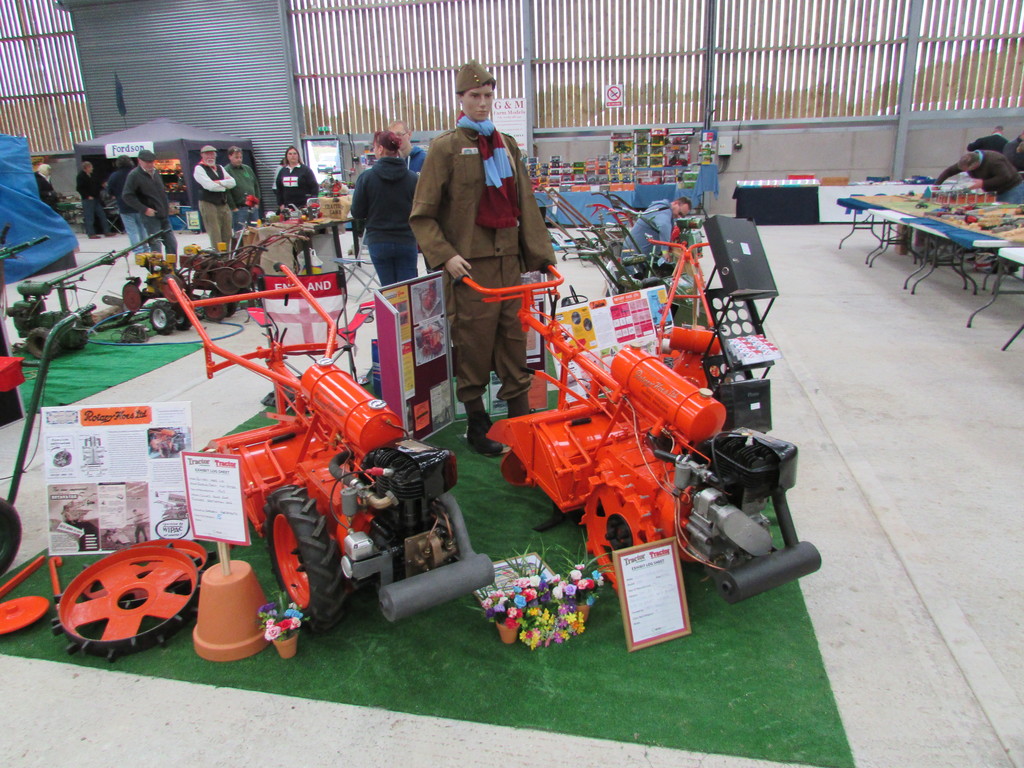
Got the final decal from titch fitted and the Brass plate I had made a while ago.
The chain was tensioned and instead of oil I used Pecker grease as I have on
other Gems, its very messy stuff but saves the risk of leaks.
-
With a view that it wont hopefully be long till the old girl is ready for running,
I decided to sort out the magneto. Heres where I hit a bit of a problem. Only
Bth mags will fit these early J.A.P's due to the angle of the chain drive and
thus clearance under the carb inlet. The only one I could find was in the hedge
across the yard on a scrap engine. A mate of mine had a look and thinks it will
be ok, it sparks now at least.
Just needs a bit more cleaning up before fitting. Ive never timed up one of these
before so should be intresting.
-
After the paint had a couple of days to set I started building her back up. With the selector rod refitted
and adjusted I'm pleased to report all 3 gears and neutral seem to select. I painted the black bits on
the various levers and fitted the closest match to the original handle grips that I could find.
-
A couple of weeks ago I finaly felt up to doing some more work on the old girl. I fitted a N.O.S oil
filter that I obtained a few years ago. The starting handle pivot was freed up by getting it very hot.
I also prepped and sprayed most of the small fittings.
I hadn't been very happy with finish obtained on the rotor shields etc so these were re rubbed down
and given another top coat.
One of the missing parts on this Gem as mentioned was the chain cover. Early Gems had plain
chain covers, going through my store I had a sound but battered one, so as they are like hens teeth
I spent days straightening it and smoothing back the filler.
-
I lost most of June and over half of July due to a combination of having some time off work and
also not enjoying the best of health. However the one thing that I did manage to do is to apply
the truly excellent decals that Titch from Machinery Decals sent me. Thankyou so much Titch,
they really lift the appearance of the Gem.
-
Heres the rotor shaft and shields painted.Sorry for the poor quality, they were taken
on my phone.
-
Thanks for the information, i'll check it out.
-
Next up was the rotor shaft. Yet again a new bearing was needed. Most of the blades are a recent replacement
however Ive managed to obtain a N.O.S set of genuine Howard blades, rather than the Dowdeswell ones that
are available now. Note how the rotorshaft is almost the same as the earlier Howard Junior, rather than the more
common gem type. Howard must of been using up old stock on these early machines.
I purchased a new set of Rotor shields a couple of years back off Standen Engineering. I paid more for them than
I paid for this whole machine! The rear soil flap wasn't used on these early machines and they both needed
extensive modifying to look like the correct type, with pieces being let in and the seems being welded up.
-
The handles were refitted, very difficult job to do on your own with fresh paint. I also fitted a new rotorchain,
normally I try to salvage one off a scrap Gem, however as this is such an historically special machine I felt
only a brand new one would do. This machine is starting to get expensive.
-
At this stage I had reached the middle of May. Work started on the jackshaft and rotorshaft plate. The rotorshaft bearing took
over 2 hours to remove! Even our 75 tonne press wouldn't shift it, lots of banging and swearing followed. But as a pleasant
surprise it was a common metric one so only cost a few pounds. After fitting new bearings and seals it was rubbed down
and resprayed along with the oil filter housing.
-
The main frame required a lot of work as it was suffering from heavy rust. After wire brushing down and treating with rust killer it was built
up with weld, ground back and skimmed in filler. This took about a week to do. The fuel tank was actually in quite reasonable condition
and only needed a light skim of filler. The intresting thing is it has the outlets welded on the other side to normal meaning that it has to be
fitted back to front. Was this deliberate or a cock up in the factory? that due to shortage of materials means it had to be sent out as it was?
-
Wheels refitted, these again came off G 367. The locating plates have been blacked. These early
Gems even used different retaining springs to the later ones. As luck would have it I had enough
to make up a full set in my store. The air filter was also overhauled. Boy didn't the brass plate take
some work to clean up!
-
I was now up to the end of April. A forklift proved a god send assisting with lining up the engine and gearbox. As you've probably seen
in the other photos the gearbox flange was broken. As cast is hard to successfully weld, after recommendations I used J-B Weld to
bond it in place. Then after rubbing down and prepping a respray followed. For the first time in nearly a month I actually felt like I was
actually making some progress.
-
My next job was the engine. These early Gems were fitted with J.A.P's from the factory. The factory records confirmed that this
was still the original one so I have done my best to save what I can. When purchased it was seized solid. A full strip down followed and I
couldn't see any reason as to why it was? Anyway it now turns freely. The engine had already been bored to + 060" and was in a bad state.
Its only the cylinder and piston that I have changed on the internals the rest is original. A lot of elbow grease followed and I don't think it came
up to bad.
-
With the gearbox rebuilt, it was time to turn my attention to the thrust bearing etc. When new the instruction book said that the engine had to be split from the machine, clutch removed
and the bearing greased every hundred hours or so. As you can imagine this didn't happen very often, infact Howard must of had so many complaints about this because after number
G501 onwards they went to the trouble of redoing all the castings and moving it inside the box.
The operating bars as can be seen were badly worn, again G367 donated better condition parts.
As already mentioned somebody had cobbled together a thrust bearing and housing etc that had worn away part of the gearbox shaft. The drawing in the manual didn't show what the
housing should look like or even what size the bearing should be so a new assembly was machined from scratch. This was fitted along with a brand new clutch plate as the old one
was looking very second hand. The bearing was also packed with "Pecker Grease" to hopefully last a little longer between services.
Next stage was to file down some over size key steel to take up a little bit of damage on the clutch locating keyways.
-
After stripping the box totally, every bearing was found to be shot. What then followed was a couple of weeks work of work as some
of bearings were impossible to obtain. Bar one they were all imperial, but the odd one had an imperial centre and width, yet a metric
outer?!? The only solution was to make a collar to go over the outside of an imperial one to turn it to metric. The main shaft was
badly worn, caused mainly by a home made codged up thrust bearing that somebody had fitted at some point in its life. This is
where G 367 proved invaluable as I was able to use the shat out of its gearbox. The bill for the bearings exceeded £300 on their
own, if it had been metric it would of been so much cheaper. New seals were also fitted throughout, I had to adapt the housing
where the clutch one went as there was nothing commercially available. Once reassembled I initially was panicking as the box was
very tight and sounded like a bag a gravel had been thrown in it, this fortunately was rectified by fitting a shim under the main shaft
bearing to position the crown wheel in the right place. I had never done a gear box properly before, I just hope it works ok once I
fire the old girl up for the first time, otherwise it could be an expensive bang...
-
Photos of the strip down.
-
An initial assessment revealed that the machine was missing its magneto, silencer, chain cover, it also had the wrong wheels fitted.
Luckily I also own the remains to G367,(pictured Below), another very early Gem but sadly this on is far to gone to ever restore, but ive been able to
use it for some of the missing parts.
After checking the factory records it was revealed that this example was built on 10/12/1941 and dispatched as part of a pair along
with G207 to Trewartha Gregory & Dolge Ltd in Cornwall (they are still trading today) via LMS goods rail on the 15/12/1941.
-
As this project is nearing completion Ive decided its finally time to share it. This is one of the reasons why work on G621 has been very slow.
Back in April I spotted this early Howard Gem on ebay, the photos below was all I had to go on. There was no serial number visable, but I
was hopping I was right in thinking it was one of the short gearbox models (the first 400 made had a shorter gearbox and frame due to the
clutch thrust bearing being on the outside rather than submerged in oil.) I made an offer as I felt the buy it now price was to high, and about
15 minutes later my bid was accepted.
When it arrived back I found the serial number hidden under the rust and was pleasantly suprised to find it was G206, which makes it the
106th Gem ever produced (production started at G101). Ive been researching Gems for many years and prior to this the lowest number I
had seen was G357, so at the present this is the earliest known Gem to exist. Realising how important this example is in the history of
Gem's I decided to press on with the restoration. I will upload the photos as and when I have time over the next few days.
-
Hi Richard I'll dig a photo out when I'm next at the unit. It is part of the casting.
Thanks for the suggestion, I've been able to identify all the other threads as either bsf or bsw, just drawn a blank with this one.
That's what I'm fearing, can't see why they would use a special thread.
It's a female thread that I need, I don't posses the skill to cut my own nut unfortunately.
-
Looks like a giant jigsaw puzzle, Paul. Hope you manage to find all the new parts off your source, otherwise hopefully the damaged cogs will be the same as something else more common. Are the bearings ok? I've just recently rebuilt a gem gearbox and because all the bearings were imperial the bill for them came to over £300 on their own.
-
This is the problem I'm up against. I've used a very accurate set of thread gauges to arrive at 19 threads per inch. Every chart I've used doesn't seem to make sense. Due to my job I have access to allmost any bsp fittings so it defiantly isnt it. Thank you for your thoughts. I would of thought that jap would of used something off the shelf but I'm dammed if I can work out what.
-
On a jap engine the exhaust outlet is threaded, it measures 2" or 50mm across the threads and has 19 threads per inch. Can anyone identify what it is please?
-
Due to a number of reasons including on going health issues I haven't done much to this project for a while, but last night I dropped the main frame off at my local boasters. Just depends how often he goes to the pub as to how long it takes him to do it. Will update the photos when it comes back.
-
|
|