| |
-
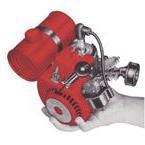
The engine on your pump is an early one and they didn't have HP decals.
I have found out from two different sources that the Electro Flow Pump was also sold as the Paradox Pump.
It was tested by the U.S. Department of Agriculture in May 1964, during the 99 hour test the engine required two spark-plugs, a magneto coil and a set of piston rings. See pdf here: http://www.fs.fed.us/t-d/pubs/pdfimage/64511303.pdf which also shows the accessories available for the pump.
And it was featured in the January 1963 edition of Desert Magazine on page 8, a pdf is available from the swdeserts.com archive here;
http://www.swdeserts.com/index_htm_files/196301-DesertMagazine-1963-January.pdf
David
-
There is also one of these in my collection, but it's escaped the camera till now.
Mine is the 1HP version, the carb and aluminium cylinder plates were missing when I bought it.
I would have thought the original owner of the pump would have chosen the pipes/primer for their intended use when new.
David
-
You have done a very good job at saving the base tank. They are very hard to find, it's even harder to find an ebay seller willing to send one outside the US.
The only one I managed to buy came with the engine in post #6, although the seller didn't think it fitted the O&R so listed both items separately.
David
-
Edit.
The above post appeared twice, Mods please delete this post.
David
-
The reed block is always aluminium, I meant the reed itself, the older ones are steel and the newer ones clear plastic.
Its looking much better now its cleaned up.
The instructions that came with my Tiger Tor (230V version) says that they were tested twice, the first to make sure the engine ran properly and a second complete test with the generator. However they didn't set the carb needle valve, this was left for the first user to adjust.
David
-
Did you notice what the reed valve was made of when took the cylinder off? if it's plastic instead of metal, then it was made after December 1963. There were three different sizes of piston rings used in these engines, later ones are the thickest and very early ones are in between the thin & thick sizes.
If the air filter still has the original foam present, it should be replaced as it disintegrates with age and can cause damage if it gets sucked into the engine.
The majority of engines with the base tank only have three screws for used for attaching the crankcase. Early engines did have a stud & nut fitted below the carb, as shown in the picture (Its missing a screw though, some will arrive next week from Webhead).
David
-
Don't forget to add two stroke oil to the gas, the original mixing ratio (24 to 1) will be on the starter label, but it looks unreadable on yours from the pictures. With modern oils the mixing ratio can be reduced.
David
-
Hopefully the previous owner removed or replaced the air filter foam before running it, as the original stuff disintegrates and can cause damage if it gets sucked into the engine. Webhead on here has new carb diaphragms if you need one, Wallfish has spare parts too.
If no one has a spare handle it should be possible to make a replacement, as its just a piece of flat steel with a large rubber grommet on the inside, let me know if you need any measurements.
David
-
Welcome to the forum,
Webhead makes new Carb diaphragms and has been some spares, see this thread.
Wallfish also has spares for these engines.
I would say your Tiny Tiger dates from approx 1963/64 and probably hasn't been used, or not used much (clean starter rope, piston & plug), the seals may be OK if there are no signs of use.
I have a Tiny Tiger with engine serial number 035753 (generator 26376), the paperwork that came with it is dated Jan 1964. The serial numbers on the generators don't seem to make much sense though, as I have two later engines with lower serial numbers on the generators.
Tiger Manufacturing Company Inc Tiny Tiger Generator General Information Jan 1964.pdf
My Tiny Tiger was a pile of bits when I bought it, the crankshaft & piston was missing and the crankcase had suffered damage from a catastrophic failure, lots of bearing dents inside and several cracks.
Luckily I found a similar bare early engine (sn 12461) which donated a crankcase, crankshafts and early type piston to complete the rebuild. These are the only pictures I have from before rebuilding it.
And here it is after rebuild.
David
-
-
I've no idea how good they are in 2 stroke engines, Uni-Pak Silicone Oil looks to have been discounted years ago as I can't find any info on it. There is a Unipak (may not be the same company) in Denmark making lubricants, but nothing for 2 stroke engines.
David
-
The information sheet that came with one of my Tiny Tiger generators states the frequency is 105 C.P.S. (Hz), but this will vary a bit with engine speed.
Tiger Manufacturing Company Inc Tiny Tiger Generator General Information Jan 1964.pdf
David.
-
Thanks for posting the pictures of the leads and link plug, from the manual I posted in post 14, the brass terminals are always the battery charging output on all the Regina Champ versions.
Measuring the brass output terminals with a voltmeter (with the plug in each position and no load connected) will confirm the plug does select between 12V & 24V, the voltage measured may be a little higher with no load connected.
I don't recommend the method in the manual for checking the polarity of the battery, using a voltmeter is a much better idea.
Don't forget to change the air filter foam, as it will crumble to dust even though it's new/unused and get sucked into the engine.
I have quite a few different plugs that look similar to the white plug that came with yours, the pin spacing is not always the same on them and forcing an incorrect one in will break the socket, the picture below shows a broken socket removed from a Champ that I restored.
David
-
It looks like an ex US military replacement engine, they often appear for sale on ebay. They rarely seem to come with an air filter or muffler though. Is it marked type 133 on the edge of the engine mount?
The only use I've seen is the Champ generator, see this thread in the O&R section of the forum;
I do wonder if they had other military applications though as the mount is incorrect for the Champ generator.
David
-
Excellent, glad I could help.
Although I can't believe I missed the both the ebay listings as I have a saved search for Turbair stuff, I only found it when looking at the ended listings.
David
-
There is a bottle attached to this electric Turbair Flydowner which didn't sell, it may be worth asking the seller if they would sell it separately and if they have any more.
http://www.ebay.co.uk/itm/152116600320
David
-
Here is another mystery O&R found on the Italian version of Gumtree, when I did a web search.
http://www.kijiji.it/annunci/ricambi-e-accessori/milano-annunci-milano/motori-ohlsson-rice/12904382
Not sure of the intended use but maybe it's a crop sprayer.
David
-
Maybe you could try printing out the chemicals page from post 7 & write wanted empty bottles on it and put it by the sprayer when you take it to shows.
David
-
The model 13B spring should go back something like this;
I have the procedure for reassembling the starter for the later model 20A engine, it may be a little confusing though as the 20A could be altered to change the rotation of the engine. And assembling it the wrong way results in a broken spring.
I've only seen a decal/sticker on the fuel tank for the later Drillgine with the model 13B engine, none of my saved pictures show any decals on the square recoil spring housing.
David
-
I've scanned the instructions for the Regina Champ, the quality isn't great as it's a photocopy, had to a bit editing to clean it up. The original page size is approx 5.7 x 9.4 inches.
Regina Champ Petrol Engine Driven Alternator.pdf
David
-
Apparently there are five different versions that were offered by Regina Electric Products Ltd. of North Acton Road, Harlesden, London, NW10.
I don't know if there any other versions of the KC Wiggins one, I haven't seen another since I bought mine.
The UK versions are based on the US made Varo Amp Champ, which can be found in this thread:
The standard models made by Regina are;
H110, 230V AC/DC & 12V DC outputs,
H111, 230V AC/DC & 24V DC outputs,
H112, 115V AC/DC & 12V DC outputs,
H113, 115V AC/DC & 24V DC outputs,
The mains voltage outputs are rated at 350W for AC & 300W for DC, the low voltage DC output is rated at 150W.
The model H114 is a combined 12V/24V DC unit for battery charging and is rated at 250W.
I have a photocopy of the Regina instructions, it doesn't give any clues to how to wire up the model H114, but given that the middle terminals are the output, it must have had a removable link plug to select either 12V or 24V. Did yours come with any connectors or cables?
David
-
Welcome to the new forum.
I have added two engine parts diagrams scans that should cover most O&R types (I have earlier one to scan yet) and the starter instructions (which were on the old forum).
These are in the thread linked here:
The new Regina Champ generator looks familiar, was it the 12V/24V version that was sold a few years ago with the original cables? If it was I don't suppose you could add a good picture of the cables to the Regina Champ thread, as they are always missing.
The Turbair doesn't look too bad, the paintwork is in better condition than mine, I have parted restored mine but haven't decided what to do with the chrome on the fan guard, which is very badly rusted.
Also don't attempt to clean the sticker on the fuel tank as it will probably end up blank, like some similar labels at work did (though that didn't matter as they were going to be replaced anyway).
David
-
Here is another bit of information on the needle valve setting for needles with an X on the valve head, this valve has a .015" orifice along the tapered seat of the valve. According to instructions the setting is to have the valve gently bottomed.
I'm sure I have some carbs with an X on valve head and but haven't tried this procedure yet.
David
-
Here is a ebay picture I found of the O&R winterising procedure, that came with an engine supplied through Rupert Ledger & Co. Ltd. (the UK distributor for O&R engines). It also mentions using a teaspoonful of oil in the cylinder and stopping the piston halfway to prevent damp air entering via the exhaust.
David
-
It has been re-listed, it will be interesting to see how much it goes for.
http://www.ebay.co.uk/itm/Vintage-Ohlsson-Rice-O-R-1HP-Engine-TILE-CUTTER-NEW-MINI-BIKE-Go-Kart-/121980468259
http://www.ebay.com/itm/Vintage-Ohlsson-Rice-O-R-1HP-Engine-TILE-CUTTER-NEW-MINI-BIKE-Go-Kart-/121980468259
David
|
|