| |
-
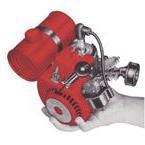
This weekend I've finally had a bit of time to see if I could free up the seized piston, it was left to soak for a couple of days with some oil in the cylinder as I usually do, then I used the flywheel to turn it gently each way a little bit at a time until it was free.
Once the piston was free to move, I could safely remove the cylinder without any further damage.
It looks like this early engine had little or no use.
I think I may have a spare con-rod somewhere, just need to locate it.
Looks like it has the odd sized piston rings, although it shouldn't have according to a service bulletin (last used in 1961 with serial number 006072) as this is serial number 006403, I guess they still had a few left and used them all up.
David
-
I collected a parcel a few weeks ago containing a mostly dismantled early O&R model L engine, complete with a seized piston & bent con-rod.
I will see how far I can rebuild it, I know the cover for the clutch housing is missing as well as most of the screws.
It seems to be quite rare to find the model letter still on the decal.
A view of the bent con-rod.
David
-
That's a very nice restored chainsaw & hedge cutter, the engine with the reduction gearbox looks like new too (any idea what the type/model number is? I can try & find out the output speed if you would like).
The parts engine looks like it may have come off a hedge cutter.
David
-
The fuel tanks seem to disappear on all types of O&R engine not just this drill, I guess the cracked one could be repaired (mine has been soldered on one of the seams). Do you know anyone that could make a new tank using the original as a pattern? (a model engineer maybe), unless someone has a spare tank of course.
There are three possible part numbers for the con-rod depending on the age of the engine (due to bearing size changes over the years), if the engine dates from 1964 or later and is a Compact II (0.85HP) or Compact III (1HP) then the part number is 31-3 according to the information I have, the Bridges Mini-Mota manual in post four of this thread also gives the same part number.
Early Compact engines (no HP decal but are 3/4HP) from 1960 to 1962 use part number 31-1, I am missing the 1963 parts list so can't confirm if part number 31-2 is for that year.
Rupert Ledger & Co. Ltd of Airfield Estate, White Waltham, Maidenhead in Berkshire (also at 28 Mackenzie St. Slough according to an older service directory list) were the main sales representative and central warehouse distributor for Europe.
Have you already found the other common problems with these engines, i.e. the carb diaphragm, air filter foam and sometimes the crankshaft seals?
David
-
I take it the original air filter was missing? they are often missing as Webhead said (although not every application used them & some of the saws had different types fitted).
The replacement you've made looks very nice, anyone with access to a lathe should be able to make one too, no idea if it would be profitable to sell them though (also there is still an incorrectly listed original one on ebay).
The manual states that the slot in the top of the cylinder should be either in-line with the crankshaft or at right angles to it, you've got it correctly fitted.
David
-
Well done and thanks for sharing the pictures, I've never seen the inside of one of those tanks before, will have to have a go at replacing the filter in mine sometime.
Seal-All seems to be available over here as well as Threebond (Yamabond?), there are probably others that would work if you read through the data-sheets and check how others have got on with them, also check the shelf-life too (seems to be two years for Seal-All).
Note; I've removed the reference to epoxy resin from my earlier post as it doesn't look suitable.
David
-
Do you mean this check valve? Which can sometimes cause problems or fail completely on early engines.
Or the check ball in the carb diaphragm bowl? Which can stick closed even after cleaning (but that doesn't sound like it would cause too much fuel/gas to pass through, unless stuck open or the spring is missing).
Note there are two different sizes of this check ball depending on the age of the carb (earlier ones had the small one shown below).
I definitely would check these first before taking the engine apart, if you do strip the engine do prepared for the bearing rollers that can drop out (have something underneath to catch them).
David
-
Be careful with any tank that has had fuel/gas in recently if using a blow-torch for heat. I was thinking to push the base off with something through the filler neck too, once the old glue has been softened with heat.
This is the type of in-line filter (Sullivan No.187) I bought for my engines, picture below borrowed from ePay.
David
-
The picture below shows the O ring I was talking about, it seals where the screw that passes through the induction housing intake that is behind the carb, it often drops out unnoticed.
The arrow shown in the picture below indicates where the screw passes through the induction housing intake.
There are two seals on the back-shaft (PTO) and another in the gearbox output shaft (that shouldn't cause the problems you are having, it would just leak oil out around the output shaft for the chain sprocket).
David
-
New old stock original seals are almost as hard to find as rocking horse droppings and there is no guarantee how long they will last.
The originals seals have a V shaped section & have to be fitted the correct way round. The only alternate we have is to fit O rings of the correct size from one of those assortment kits, the diameter of the crankshaft & back-shaft changed to a bigger size for the later engines.
Also don't forget to change the O ring for the screw that goes through the fuel intake on the induction housing, it usually falls out without being noticed.
I seem to recall someone having a problem with an O&R engine sucking all the gearbox oil through one of the seals, it was very smoky indeed.
What carb needle setting did you have for the last attempt (where fuel was dripping from the carb)? Also was the spark-plug immediately oiled up again when it only fired the once? And finally but probably unrelated to the current problem, are you using the CJ14 or CJ8 spark-plug?.
David
-
The same happened with my first O&R (a Tiny Tor, same as The Tiny Tiger but 240V output), all attempts to unblock the filter failed, I do have a much better technique for cleaning it now. I learnt a lot from that first restoration.
I ended up fitting an in-line filter (shown below on a different generator where a previous owner had damaged the tank filter) that was recommended on the previous forum, maybe I should revisit that base tank at some point, I've no idea if the filter can be refitted though as I've never opened one, but I do have some other small tank filters I could use, also I will probably find a leaky base tank eventually.
I would use a heat-gun or equivalent to warm up the base & hopefully soften the glue originally used to remove the base, then see if the filter can be repaired.
Before refitting the base clean the old glue from the edges of both tank parts and use a fuel/gas resistant glue to refit the base.
David
-
I can only find synthetic oils on the Royal Purple site;
http://www.royalpurpleconsumer.com/
Is this the one you have?
http://www.royalpurpleconsumer.com/products/hp-2c-2-cycle-engine-oil/
I guess you will let us know if it works or not.
If the engine is getting flooded the spark-plug will be getting clogged with oil.
Here is the carb needle setting information from the carb repair tutorial sticky thread;
Carb Setting
These posts are from the old forum thread for setting the carb needle.
Original post by Webhead.
"1 and 1/4 out for starting. I have had units run good between 3/4 and a full 2 turn
out."
Original post by usedtoolman.
"If I recall there is one more factor on the needle setting. If you have a slotted needle
the setting is 1/2 turn as opposed to 1-1/4 for the non grooved needle."
You can cut a piece from any filter intended for small engines that is the correct thickness to fit, I have been cutting circles (some chainsaws had other shaped filters) out of this pre filter foam I got from the local lawnmower/grounds maintenance/small tool repair shop.
Leaving the old filter foam off is better for getting it running if you don't have a replacement yet, as this tends to happen. Pretty nasty stuff if it gets into the engine.
David
-
I suspect the WD-40 has only cleaned a tiny part of the filter, does it still drip out slowly with the gas cap removed?
See this post for another method of cleaning the tank filter;
Excess oil & fuel usually does come out of the exhaust if there is any trouble with starting or keeping an engine running.
The recommended fuel/gas & oil mix is 32:1 using modern 2 stroke oils, what ratio have you been mixing to?
Is the Royal Purple oil mineral or synthetic based? I have been using the standard mineral based Stihl 2 stroke oil (red color) that was recommended by someone that uses chainsaws regularly, just don't try the synthetic version (green color) as it doesn't work well at all, see this thread for more;
David
-
Perhaps this should be moved to the Ohlsson & Rice section;
http://myoldmachine.com/forum/74-ohlsson-and-rice/
All the information you may need for the engine is there, have a look at the carb rebuild thread to start (if you haven't already found it).
Webhead sells replacement carb diaphragms (send him a PM), also don't forget to clean out/replace the old crumbly air filter foam so that it doesn't ruin the engine if it gets sucked in.
These augers aren't that common, I can't believe you got given it , I've been trying to add one to my collection for quite a while without success.
David
-
It has been a while & it's good to hear from him too.
Also there are still a couple more Turbair items waiting to be scanned here, a spraying guide and a PBI chemicals guide.
David
-
Hi Terry,
I have the same problem, there never seems to be enough fun time.
I'm glad I could help with your carb repair, we all try our best on here to keep these compact engines going & help others to do the same, so if there is anything else you need advise about we should be able to help.
Good luck with the rest of your restoration.
David
-
Good advise, will add that check to my repair notes, I've definitely had fuel leaking from one before, just be careful not to over-tighten the carb screws as it could potentially break the casting, new gaskets are the probably best solution if they are damaged.
David
-
I was curious to find out more about this sprayer, below is a picture showing the two versions of it together with the usual non-existent PPE from a NIAE test report I bought.
They had a total of 7 faults with the machine & it's engine during the 18½ hours they used it for. The engine fitted to this sprayer is the German made JLO 2-stroke engine rated at 0.86HP with a 26 cc capacity and the machine tested dated from 1962.
For comparison the O&R engines used on the Turbair sprayers are approx 20 to 22 cc at ¾ to 1HP depending on how old they are.
David
-
This is the problem with photobucket (google somehow manages to find the actual pictures when using image search, but that doesn't help with the original thread though), image below taken from a Drillgine thread on here;
Also the previous O&R forum got ruined as the third party image hosting it used broke removing all the pictures.
The pictures on here are hosted by the forum and presumably to keep server costs down (funded by supporters) the image sizes are keep to a more sensible size. I don't know how many mega-pixels 4-5Mb relates too but high resolution pictures aren't really needed for most things on here.
I keep the originals (i.e. high resolution pictures or PNG format scans for documents) on my PC and create a cropped/low file size version using free image editing software (1024 x 768 pixels is fine), I use IrfanView for this but others are available, some of which are probably easier to use.
I do have scans created from my manual, I just haven't had the time to fully edit them & create a PDF for the forum. I could probably upload the exploded parts diagram (two pages) if that would help.
I had a quick check of the three saws that are accessible yesterday, it seems the red gas caps suffer the worst as they were exposed to fuel/gas (although one doesn't bother me as the tank is rotted through from the tree sap in the sawdust that a previous owner couldn't be bothered to clean off). I wonder if they were made from the same plastic as the deteriorating bearing cages used on the early engines.
David
-
I forgot the token wear "chemical proof gloves" mention in the instructions, also don't forget to secure that tie! They also advised against spraying towards the wind.
Some of it is in the literature I have, the Turbair 21 pictures came from Paul, the rest from occasion research on the web (any interesting document or picture usually gets saved to my PC as anything can disappear at any time on the web).
David
-
Is there a reason why you didn't post the pictures using the forum? I only mention this as they can disappear at any time with external sites like "photobucket" leaving the posts a bit confusing for anyone looking for help in the future.
Here is a note about the tank seal used in these saws from the service manual;
The manual doesn't have a picture showing the tank half with the vent pipe, is it leaking out of the vent pipe or from around the join where it fits into the tank?
Try asking Webhead if he has any tank caps available.
There should be seals on both tank caps, check they are not split or missing.
David
-
Did you strip & clean the carb? Sometimes the check ball valve can stick, also there is a fine mesh filter in some carbs that can get blocked (which they recommended removing if it caused trouble).
Is the fuel leak definitely coming from the vent pipe? If not it could be either the seal between the two tank halves, a cracked fuel line (they can go hard & brittle with age), or even the carb gaskets where it attaches to the induction housing. Also I've seen really bad corrosion on the bottom of some tanks, I have one myself where the sawdust was never cleaned off & left to cause it to rot through.
I can't help thinking it's better to clean the fuel line off the engine rather than pushing the crud back, be careful not the make a hole it the tank filter if unblocking it this way.
This probably isn't going to help if it's a fuel problem, but there is a service bulletin where they recommended changing the CJ14 spark-plug to a CJ8 as it was found to be a cause of difficult starting, see bulletin below;
Some other problems they had were; the brass grommet the starter cord goes through wearing out quickly (changed to steel for later engines), some chainsaw sprockets where found to be soft (the teeth wear into the sprocket & can cause chain to seize) and some tank caps became soft when exposed to fuel & early ones swelled making them difficult to remove.
David
-
Yes that looks correct, it hooks over the top of the post & keeps the throttle butterfly valve held open. As the engine speed increases the air blown through by the flywheel fan pushes the governor vane up, which in turn rotates the butterfly valve to close it.
Quite difficult to photo, but here is the spring on a slightly earlier carb (has side needle valve).
In your second photo the governor vane is inserted the incorrectly, it needs to be turned 180 degrees around and reinserted as shown in the pictures below.
Once it's back together check the governor vane & throttle butterfly valve rotates freely.
David
-
Yes there is an Austrian connection, its the designer of the Micronair rotary atomiser Edward Julius Bals who was born in Austria, he moved to England in the 1930's then China, Asia and Ski Lanka before returning to England. http://pubs.rsc.org/en/content/articlelanding/2000/po/b006350i#!divAbstract http://www.fwi.co.uk/machinery/best-of-british-micron-sprayers.htm
The earliest Turbair with an O&R engine is the Turbair 21, the leaflet isn't dated but given the fact the engine is described as being under 1HP it will date from around the mid 1960's (the 1HP engine became available in 1965). The price then was £45 for the sprayer & £8 extra for a wheel fitting, the address given is Edward Bals (Sprayers) Ltd of Turbair Works, Bromyard, Herefordshire. Thanks to Paul (pmackellow) for the pictures from the leaflet.
I have also found a patent from Edwards Bals of Turbair Works, Bromyard that was applied for in June 1964 for a sprayer that looks similar to the Turbair 21; https://worldwide.espacenet.com/publicationDetails/originalDocument?CC=GB&NR=1105652A&KC=A&FT=D&ND=3&date=19680313&DB=&locale=en_EP#
I suspect that this crop sprayer maybe a Turbair 21, it appeared on an Italian small ads website a few years ago.
There is also an earlier engine powered sprayer patented by Edward Bals (applied for in 1961) this was made by Birfield Engineering/Micron Sprayers and known as the Micronette 26 & 75; https://worldwide.espacenet.com/publicationDetails/originalDocument?CC=US&NR=3221993A&KC=A&FT=D&ND=3&date=19651207&DB=&locale=en_EP#
The later O&R powered Turbair was sold by Edward Bals (Sprayers) Ltd of Bromyard, Herefordshire as the Turbair Tot and by Turbair Ltd (PBI) of Britannica Works, Waltham Abbey, Essex as the Turbair Tot 2S, PBI also made a lot of the chemicals for crop spraying & pesticides for killing flies, some of the chemicals available then are still in use today, but banned chemicals vary for different countries. It's worth finding out the PPE requirements for using these chemicals, they can also be harmful/fatal to animals & pets as well as us.
The O&R engines made after June 1967 are easy to date using the engine serial number code, the engines on mine date from 1968 I also have the engine dating from 1974 that was from a Turbair.
The Turbair TOT eventually became the Turbair Fox (powered by the Italian Fox Engine) when O&R/AEP engines were discontinued, the last 2 stroke version offered by Micron was the Turbair Motafan (still using the Fox engine), the newest one I've seen dates from 1998.
Only the electric versions are still made by the Micron Group, they were re-branded in Jan 2013 from the Turbair Electrafan to the Micron Electrafan; http://www.microngroup.com/micron_group_has_rebranded
The battery powered Micron Electrafan is currently being sold for £365, which doesn't included a battery pack (another £100).
http://www.daltonengineering.co.uk/consumables/fly-spray-prevent-auto/electrafan-sprayer-12v-excl-battery-pack.html
David
-
I don't know the exact application for this engine, that's why I asked in the first post.
David
|
|